Introduction
In contemporary organisations, especially within technology-driven sectors, the executive landscape frequently includes a Chief Innovation Officer (CINO) and a Chief Technology Officer (CTO). While both roles operate at the intersection of technology and strategy, their focus and deliverables diverge significantly. Understanding these distinctions is vital for boards, executive teams, and IT professionals to ensure clear accountability and optimised business outcomes.
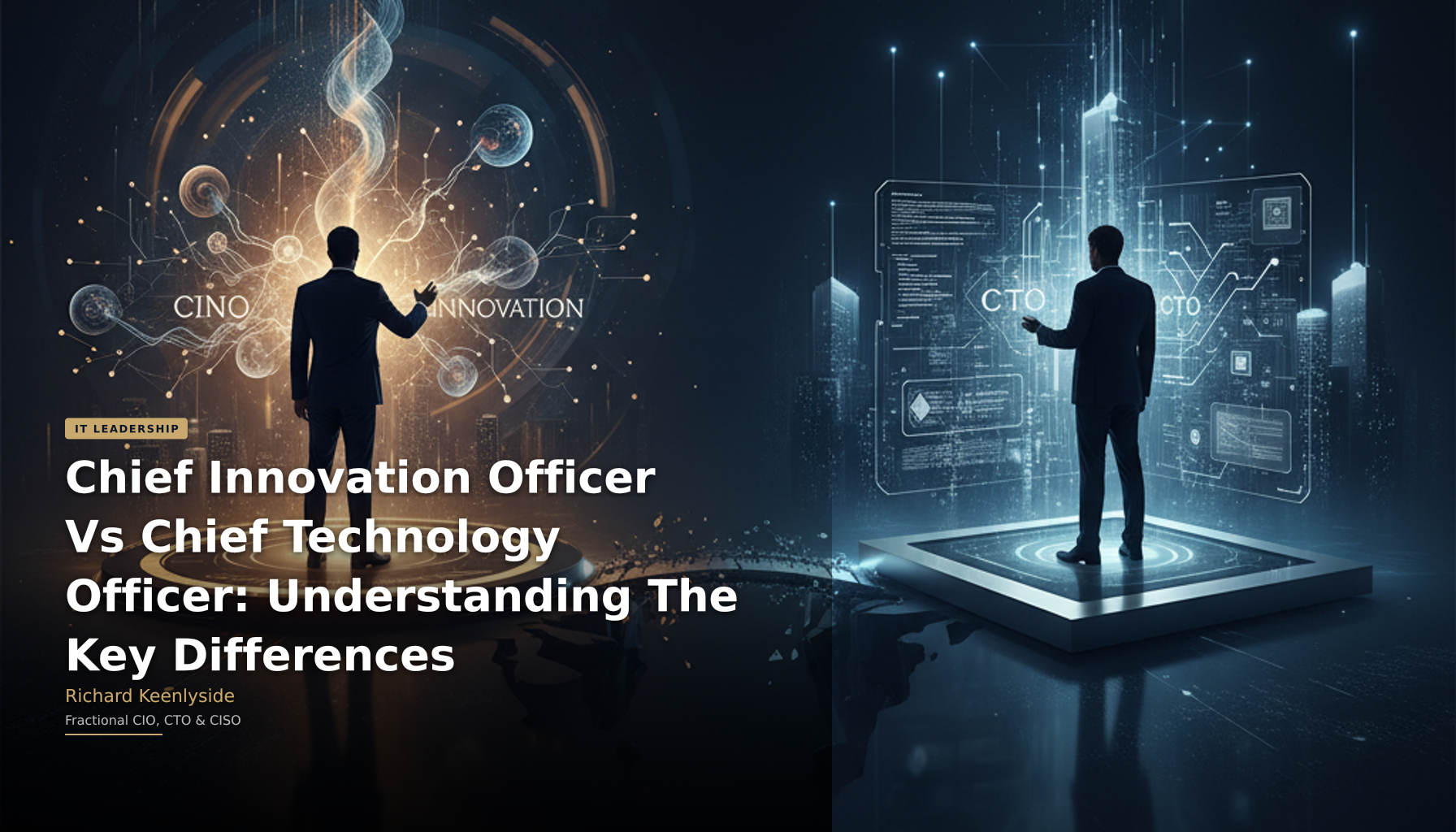
Defining the Roles
Chief Innovation Officer (CINO)
The Chief Innovation Officer is primarily responsible for fostering a culture of innovation within the company and driving strategic initiatives that generate new ideas, products, services, or business models. The CINO’s remit often spans the exploration of emerging trends and technologies, identifying opportunities for transformation beyond existing capabilities.
Chief Technology Officer (CTO)
The Chief Technology Officer, on the other hand, is fundamentally focused on the organisation’s technological infrastructure and the delivery of technology solutions that support current business objectives. The CTO typically oversees development, deployment, and maintenance of technology platforms, ensuring they align with operational and strategic goals.
Key Differences Between CINO and CTO
Scope of Responsibility
- CINO: Drives innovation strategy, research and development (R&D), and cross-functional collaboration to explore disruptive ideas.
- CTO: Manages technology architecture, software development, systems integration, and IT operations.
Time Horizon Focus
- CINO: Focused on long-term innovation pipelines and emerging opportunities that could redefine the business.
- CTO: Concentrates on medium to short-term delivery of technological solutions to meet current business needs.
Stakeholder Engagement
- CINO: Works closely with research teams, marketing, strategic business units, and external partners to cultivate new ideas and business models.
- CTO: Collaborates primarily with engineering, IT operations, and product teams to execute technological initiatives.
Metrics and Success Criteria
- CINO: Innovation pipeline robustness, number of successful pilot programmes, intellectual property creation, and contribution to top-line growth through new offerings.
- CTO: System uptime, delivery timelines, technology ROI, cost optimisation, and security compliance.
How the Roles Complement Each Other
In practice, effective organisations leverage the CINO and CTO roles as complementary pillars. The CINO explores novel avenues and validates innovative concepts, while the CTO translates those validated ideas into scalable, reliable technological solutions.
For example, a CINO might identify a promising application of artificial intelligence to enhance customer experience. The CTO will then architect and implement the underlying technology infrastructure to bring that application into production.
Challenges and Overlaps
Despite their distinct mandates, the roles occasionally overlap, particularly in smaller organisations where resource constraints dictate broader responsibilities. This overlap can result in ambiguity, duplicated efforts, or strategic disconnects unless roles and boundaries are clearly defined.
Clear communication and governance structures are essential to delineate when innovation exploration transitions into technology execution. Regular joint reviews between CINO and CTO functions ensure synchronization without stifling creativity or operational delivery.
Conclusion
Both the Chief Innovation Officer and Chief Technology Officer hold pivotal but distinct roles in steering a company’s future. Recognising and respecting their different focus areas allows organisations to harness innovation while maintaining technological excellence. IT leadership teams that clarify these roles promote strategic alignment, operational efficiency, and sustained competitive advantage.
For boards and executives considering these roles, it is prudent to establish clear charters and performance metrics tailored to their organisation's specific context and maturity.