Red Flags in Technology Due Diligence: What PE Deal Teams Should Walk Away From
Technology due diligence red flags can decisively alter the outcome of a private equity deal, yet they are often overlooked in the rush to complete transactions. In my experience as a fractional CIO and programme director, I have observed that up to 30 percent of deal risks stem from hidden issues such as end-of-life systems and unresolved cyber incident history, which, if ignored, can lead to failed integrations or unexpected costs.
Why Identifying Technology Due Diligence Red Flags Matters
Private equity firms rely heavily on thorough IT risk assessment to safeguard investments and ensure value creation post-acquisition. Without a rigorous technology due diligence process, PE deal teams risk acquiring companies burdened with technical debt, critical personnel dependencies, or contractual obstacles like change of control clauses. These issues can impede the integration process, delay value realisation, or even compromise the business’s operational continuity.
Deal breakers identified late can force abrupt walk-aways or costly renegotiations, damaging relationships and reputation. Therefore, understanding the key warning signs that should prompt reconsideration before the deal closes is crucial for investors and advisors alike.
Technology Due Diligence UK: Key Red Flags PE Deal Teams Must Recognise
A successful technology due diligence in UK transactions demands attention to practical details that often reside beneath surface-level IT reviews. Here are the critical red flags I regularly advise PE teams to treat as potential deal breakers:
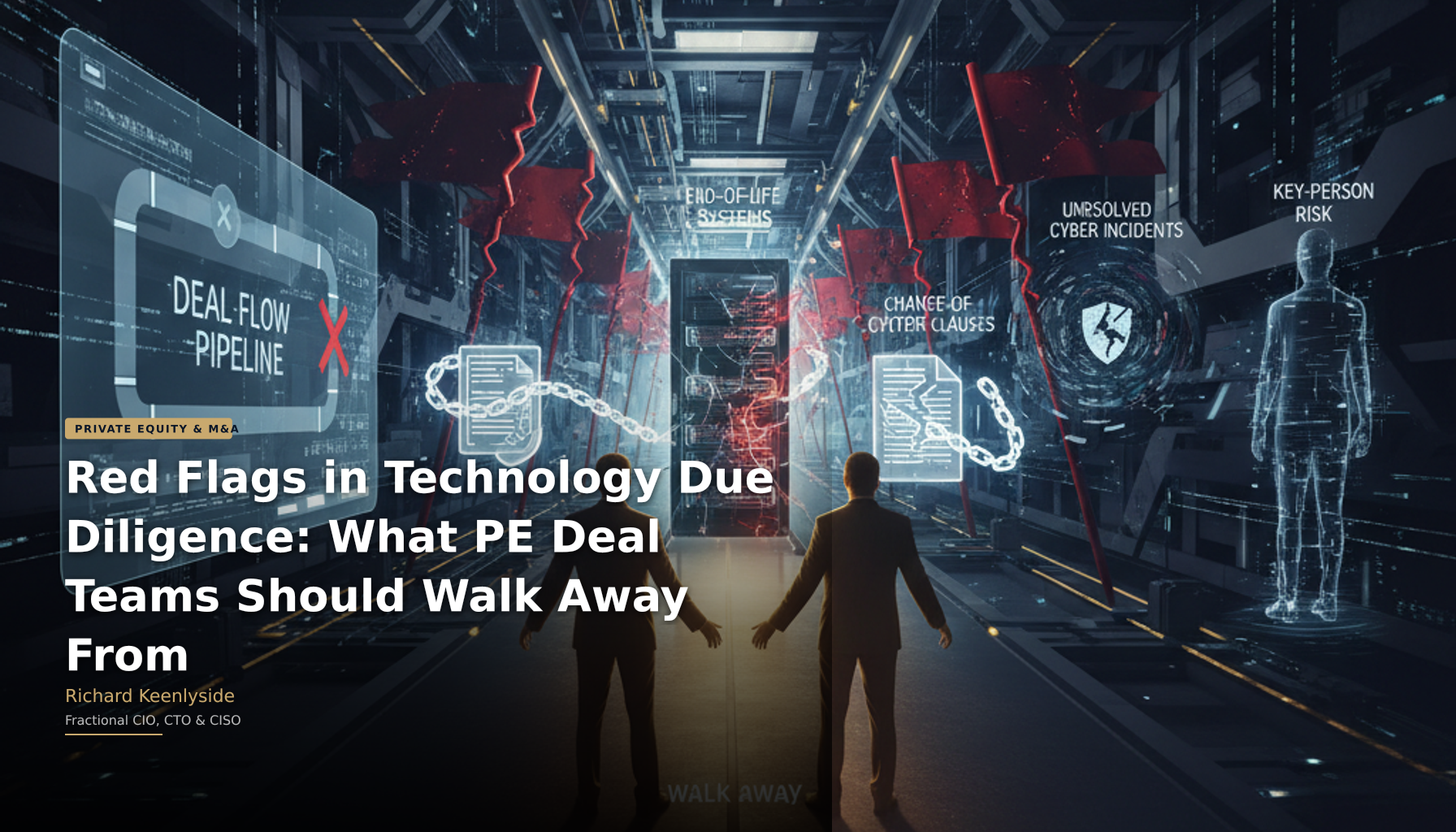
- End of Life Systems
Software or hardware approaching or beyond official support dates present a severe risk. These systems usually suffer from security vulnerabilities, lack of vendor patches, and maintenance difficulties, placing future scalability and compliance in jeopardy. As a fractional CIO, I have seen numerous PE deals stall due to an acquirer's reluctance to absorb unplanned legacy modernisation costs.
- Change of Control Clauses
Hidden in vendor contracts or service agreements, these clauses can trigger penalties or contract terminations if ownership changes. They often necessitate renegotiations or alternative supplier sourcing, impacting the deal’s financial model and post-merger integration timeline.
- Unresolved Cyber Incident History
Past breaches or security incidents not adequately disclosed or remediated may indicate systemic cybersecurity weaknesses. Such oversights can expose the buyer to regulatory fines, reputational harm, or ongoing operational disruption.
- Key Person Risk
Over-dependence on a few critical IT personnel - especially those with proprietary knowledge or specialised technical skills - poses continuity risks. Loss of these individuals shortly after acquisition can derail transformation programmes and maintenance operations.
- Accumulated Technical Debt
A significant backlog of deferred IT work, undocumented customisations, or patchwork integrations increases complexity and costs. Ignoring technical debt during due diligence often leads to underestimated integration effort and post-deal instability.
Identifying these red flags requires not only document review but also in-depth conversations with IT leadership and teams. Detailed analysis of infrastructure, software lifecycle status, and contract portfolios is essential.
Delving Deeper Into Change of Control Clauses and End of Life Systems
One recurring pattern I observe during technology due diligence reviews involves problematic change of control clauses in key third-party contracts. For example, a portfolio company reliant on a specialised SaaS platform discovered post-signature that a change of ownership triggered a six-month exit provision. The resulting uncertainty forced expensive parallel service arrangements and delayed operational synergies.
Similarly, end-of-life systems often masquerade as stable infrastructure until the acquiring firm's CIO or fractional CTO digs into patching history and vendor roadmaps. I recall a PE-backed digital business where the core ERP was running on unsupported software releases. The discovery led to a suspension of the deal since the cost and risk of replacement were far beyond initial estimates. In both cases, these issues highlight how critical technical due diligence is to avoiding unpleasant surprises.
Having led multiple technology due diligence assignments in UK deals, I emphasise cross-referencing vendor contracts with architecture reviews and cyber incident logs. This triangulation often exposes latent risks that otherwise remain hidden.
Common Mistakes to Avoid During Technology Due Diligence
- Failing to involve hands-on IT leadership, such as a fractional CIO or programme director, to assess technical severity and remediation plans.
- Overlooking contractual nuances like hidden change of control clauses due to reliance on high-level legal reviews alone.
- Ignoring the impact of existing technical debt and assuming all legacy systems will seamlessly migrate post-deal.
- Neglecting to perform a full cyber incident history evaluation, leaving incident recurrence risks unmitigated.
- Underestimating key person risk by not validating knowledge transfer strategies or backup resource plans.
- Rushing the diligence process without allocating adequate time for detailed infrastructure and software lifecycle assessments.
Frequently Asked Questions
What are common technology due diligence red flags in private equity deals?
Typical red flags include end of life systems lacking vendor support, contractual change of control clauses that trigger penalties, unresolved cyber incident history indicating weak security, excessive technical debt, and over-reliance on key IT personnel. Each can materially affect deal viability and integration success.
How should PE deal teams approach technical debt during due diligence?
Deal teams must quantify the extent of deferred maintenance, undocumented customisations, and system patchwork. Engaging experienced IT leaders to assess remediation efforts and costs is essential to factor realistic post-deal IT investment into valuation and integration plans.
Why is understanding change of control clauses vital in technology contracts?
Change of control clauses can impose financial penalties or force contract renegotiations when ownership changes, adding unanticipated costs or operational risks. Early identification allows deal teams to negotiate terms or find alternatives, protecting deal economics and continuity.
In conclusion, navigating technology due diligence red flags is fundamental for successful private equity transactions. Issues such as end-of-life systems, change of control clauses, unresolved cyber incident history, key person risk, and technical debt can threaten value realisation and operational stability. By recognising these walk-away risks early and involving experienced fractional CIOs and programme directors, PE deal teams can confidently make informed decisions, safeguarding investments and setting the stage for post-acquisition success.
How Richard Can Help
Technology Due Diligence and Post-Acquisition Integration
I work with PE firms, corporate acquirers, and portfolio company management teams on technology due diligence, pre-acquisition risk assessment, and post-merger integration planning. If you need an independent technology leader who understands the commercial pressures of M&A, I can provide the rigour and pace that transactions demand.