Post-Merger IT Integration: How Fractional CIOs Maximise Value
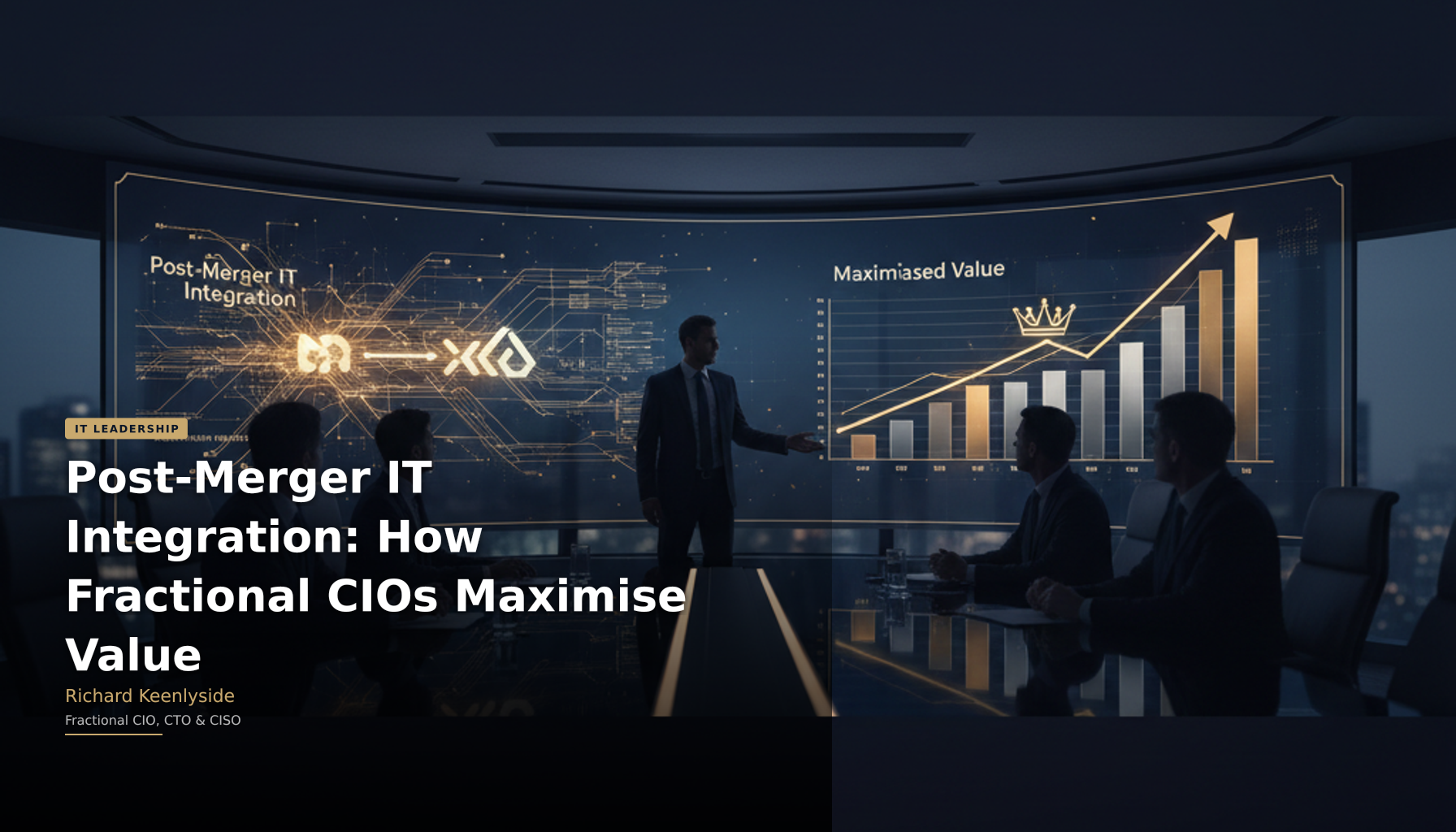
IT integration during mergers is often the linchpin that determines whether the combined organisation will succeed or face operational setbacks. In my experience guiding over 50 UK and international acquisitions, I have observed that poorly managed IT integration can erode up to 30 percent of expected deal value. This emphasises why expert leadership, particularly from fractional CIOs, is indispensable in realising the synergies anticipated in mergers and acquisitions.
Why IT Integration During Mergers Matters
The challenge of IT integration during mergers demands more than just technical expertise. Companies embarking on mergers and acquisitions typically have complex and disparate IT environments. Without clear governance and a strategic roadmap, integration efforts risk severe disruption to business continuity, data loss, increased cyber risk, and inefficiency expensive to rectify.
Businesses that do not prioritise IT integration early often struggle with duplicated systems, misaligned data, and unclear ownership. This misalignment delays the ability to leverage combined capabilities and erodes stakeholder confidence. For private equity firms and scale-ups particularly, where time to value is critical, effective IT integration becomes a decisive factor in the deal’s overall success.
IT Integration During Mergers: The Role of a Fractional CIO
A fractional CIO brings targeted, board-level leadership to the post-merger IT integration process without the cost or commitment of a full-time executive. Here are the crucial ways I have seen fractional CIOs add value during mergers and acquisitions:
- Strategy Alignment: A fractional CIO ensures IT strategy aligns precisely with the deal’s commercial objectives. This includes setting the vision for integration architecture and defining success criteria upfront.
- Rapid Due Diligence Insight: Leveraging prior experience and frameworks, a fractional CIO can quickly identify integration risks and gaps during due diligence, which reduces surprises post-close.
- Clear IT Operating Model Design: Post-merger businesses often require a redesigned IT operating model. Fractional CIOs orchestrate this complex reset, defining technology ownership, service delivery models and cross-business processes.
- Stakeholder Collaboration: Acting as a bridge between IT, business units and deal teams, the fractional CIO facilitates transparency and alignment to keep integration on track.
- Scaling Integration Delivery: Fractional CIOs fill critical leadership roles in programme governance without adding long-term overhead, providing agility in resource allocation.
- Cybersecurity and Compliance: Protecting combined datasets and maintaining regulatory compliance is paramount. A fractional CIO ensures security frameworks are incorporated from Day 1.
Deepening IT Integration Success: A UK Private Equity Example
In a recent engagement with a UK-based private equity-backed software scale-up acquiring a European competitor, I led the IT integration phase as a fractional CIO. The acquiring company had ambitious growth targets, but their IT systems were fragmented, spanning different ERP, CRM and cloud platforms.
The integration plan was structured around three pillars: rationalising overlapping platforms, consolidating data and standardising security controls. Early involvement allowed identification of redundant legacy systems whose sunset accelerated realisation of cost synergies by six months.
Throughout the 100-day integration, I provided board reports that distilled technical complexity into clear business impact statements. Maintaining stakeholder trust was critical as teams navigated operational risks and change fatigue. The fractional CIO role was pivotal in delivering a streamlined IT environment that supported rapid business scaling, improving both efficiency and governance in one cohesive programme.
This experience reflects a common pattern I witness in mergers and acquisitions: early fractional CIO involvement directly correlates with faster, cleaner IT integration outcomes that protect and enhance deal value.
Common Mistakes to Avoid in IT Integration During Mergers
- Delaying IT integration planning until after deal closure, increasing risk and lost time
- Failing to define clear IT governance and decision-making structures post-merger
- Underestimating the complexity and costs of data migration and application rationalisation
- Neglecting cybersecurity harmonisation, leading to vulnerabilities during transitions
- Overlooking the cultural and human factors impacting IT adoption and change management
- Lacking continuous communication with stakeholders on progress, risks and dependencies
Frequently Asked Questions
What is IT integration during mergers and why is it important?
IT integration during mergers involves combining the technology systems, data, and processes of merging companies to operate as a unified entity. It is crucial because poor integration can cause operational disruption, diminish deal value, and expose data to security risks.
How can a fractional CIO improve post-merger IT integration?
A fractional CIO brings strategic and practical IT leadership customised to the merger’s needs without the overhead of a full-time CIO. They align IT with business goals, manage risks, and ensure seamless coordination between teams to maximise value extraction from the integration.
What are typical challenges in IT integration for mergers and acquisitions?
Common challenges include incompatible systems, unclear data ownership, disjointed IT governance, escalating costs, and cybersecurity gaps. Addressing these requires a structured approach overseen by experienced IT leadership like a fractional CIO.
Effective IT integration during mergers is not an optional add-on but a critical enabler of successful business transformation. My experience shows that fractional CIOs bring the precise blend of strategic oversight, technical knowledge, and pragmatic governance needed to unlock value promptly and securely. Organisations that prioritise IT integration leadership position themselves firmly to realise the full potential of mergers and acquisitions.
How Richard Can Help
Need Experienced Technology Leadership?
Whether you need an interim CIO to stabilise operations, a fractional CIO for strategic oversight, or a trusted technology advisor to challenge your current direction, I work alongside leadership teams to deliver real outcomes. With over 25 years of experience across UK and international organisations, I provide the depth of expertise your business needs.