Understanding Claude Mythos: Risks and Implications for Enterprises
In recent months, the question of what is Claude Mythos and what risks does it pose has become increasingly relevant for enterprise leaders and technology professionals. In my experience working at the intersection of AI strategy and cybersecurity, I have observed that misconceptions about Claude Mythos often lead to overlooked security vulnerabilities and compliance challenges within organisations.
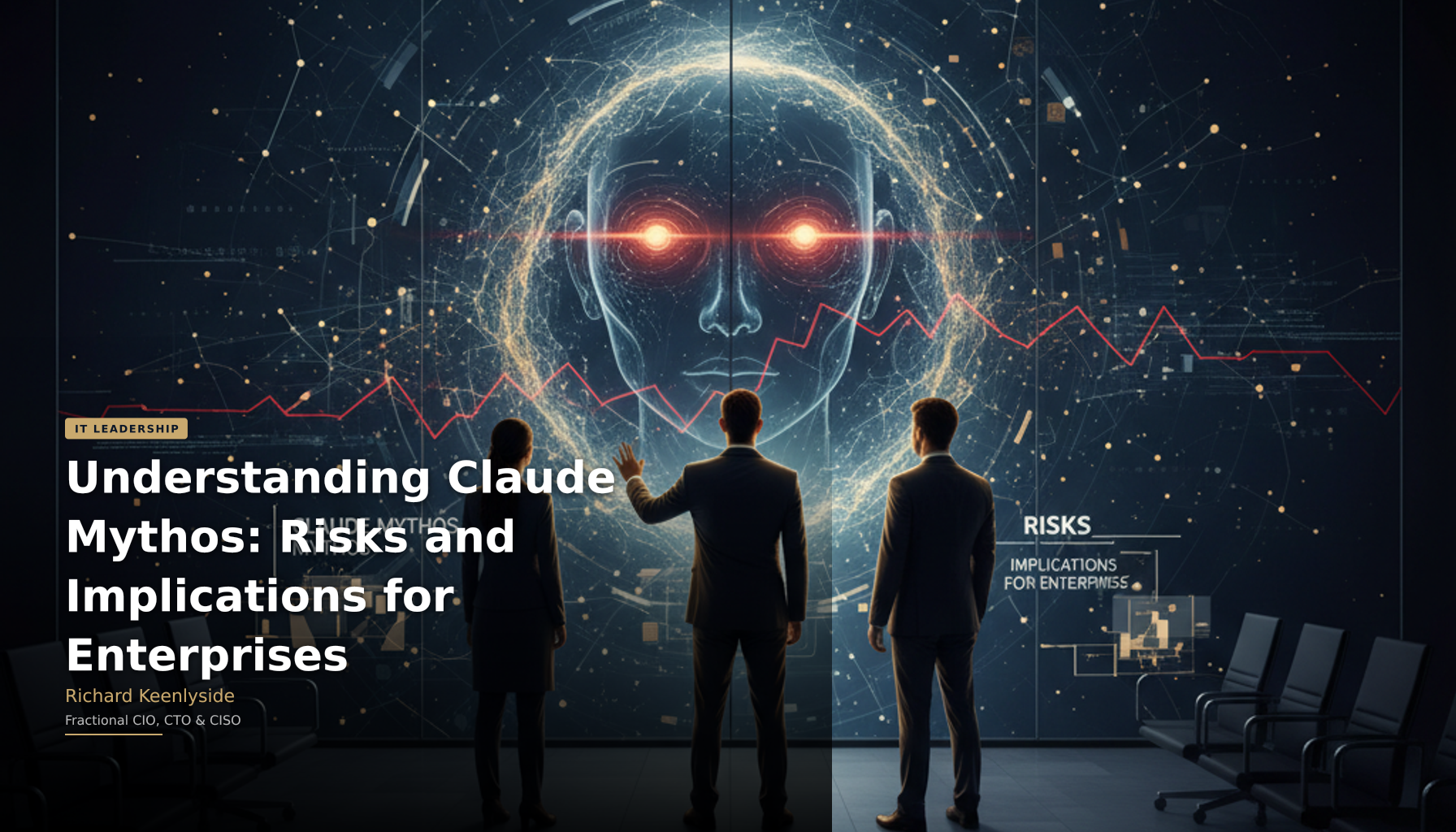
Why Understanding Claude Mythos Matters for Enterprises
Claude Mythos, a term increasingly referenced within AI circles, pertains to a series of assumptions and exaggerated claims surrounding certain AI model capabilities and security postures. For enterprises integrating artificial intelligence into their technology stack, recognising the mythology around Claude Mythos is crucial. Failure to identify and mitigate these risks may result in data leakage, legal infractions, or significant brand damage.
Businesses that operate in highly regulated environments or handle sensitive client data are particularly vulnerable. Without clear understanding, corporate boards and IT leadership may unknowingly endorse strategies based on flawed premises, leading to ineffective governance frameworks.
What Is Claude Mythos and What Risks Does It Pose? Key Considerations
The phrase Claude Mythos arises from confusion between marketing narratives and the practical realities of AI model deployment, particularly in enterprises relying on conversational AI solutions. Below are several specific risks enterprises must consider:
- Overreliance on Claimed Model Security: Vendors may assert that Claude models inherently safeguard against data breaches or adversarial inputs. In practice, no AI system is impervious to exploitation, and assumptions of built-in immunity lead to insufficient security controls.
- Misunderstanding Data Handling and Privacy: Claude Mythos often involves misconceptions that user inputs and outputs within these AI systems are automatically encrypted or not utilised for training. Enterprises must verify data residency and retention policies to ensure compliance with regulations such as GDPR or HIPAA.
- Ignoring Model Limitations and Bias Risks: Some decision-makers believe Claude models fully comprehend complex contexts or ethical boundaries. In reality, models trained on vast but generic data sets may produce biased or misleading outputs without human oversight.
- Insufficient Incident Response Planning: Enterprises sometimes fail to develop dedicated incident response protocols tailored for AI-related breaches or misuse. The myth that AI incidents are rare or minor can delay critical remediation steps.
- Vendor Lock-in and Integration Challenges: Assuming seamless integration and agility can lead to vendor lock-in, making future system upgrades or security audits cumbersome, ultimately increasing organisational risk.
Real World Implications of Claude Mythos: A Pattern Seen in Practice
Throughout various strategic engagements, I have witnessed enterprises grapple with unexpected consequences linked to misunderstandings about Claude Mythos. For example, a financial services firm integrated a conversational AI powered by a Claude-type model, presuming the vendor’s assurances of data privacy would suffice. However, during a routine compliance audit, it emerged that sensitive customer queries were logged and stored without adequate anonymisation, breaching internal data handling policies.
Further complicating matters, the organisation’s lack of a defined AI security governance framework meant it was unprepared for potential adversarial attacks targeting the model through crafted inputs designed to elicit confidential information. This oversight exposed them to reputational damage and potential regulatory fines.
Such patterns underline the importance of verifying model capabilities, ensuring transparency from vendors, and implementing robust oversight mechanisms rather than taking claims at face value. Comprehensive risk assessment is non-negotiable when deploying AI at scale.
Common Mistakes to Avoid Regarding Claude Mythos
- Assuming AI vendors’ claims are guarantees of security and compliance without independent validation.
- Neglecting to conduct thorough AI model audit and data flow analysis before integration.
- Failing to align AI deployment with existing governance and risk management frameworks.
- Underestimating the need for human-in-the-loop controls to manage biases and inaccuracies.
- Overlooking the necessity for incident response scenarios tailored to AI-specific threats.
- Ignoring the long-term operational implications of vendor lock-in and proprietary system dependencies.
Frequently Asked Questions
What are the typical security concerns associated with Claude Mythos?
Typical concerns centre on overestimated data protection capabilities, lack of clarity on data usage, and vulnerability to adversarial attacks. Misplaced trust in the AI model’s innate security often leaves organisations exposed to data leaks and exploitation.
How should enterprises assess the risks posed by Claude Mythos?
Enterprises should conduct rigorous vendor due diligence, including reviewing data handling practices, performing independent security audits, and integrating AI governance into broader risk management procedures. Additionally, they should develop AI-specific incident response plans.
Can Claude Mythos affect regulatory compliance for enterprises?
Yes, misunderstandings around Claude Mythos can lead to non-compliance with data protection laws such as GDPR, HIPAA, or sector-specific standards, as enterprises may inadvertently expose personal or sensitive information through inadequate controls.
In conclusion, understanding what is Claude Mythos and what risks does it pose is critical for organisations adopting advanced AI technologies. Dispelling misconceptions helps enterprises establish precise governance, manage vulnerabilities, and align AI deployments with their strategic risk frameworks. With informed leadership, the threats posed by Claude Mythos can be mitigated effectively, enabling safer, compliant, and more resilient AI integration.
How Richard Can Help
Need Experienced Technology Leadership?
Whether you need an interim CIO to stabilise operations, a fractional CIO for strategic oversight, or a trusted technology advisor to challenge your current direction, I work alongside leadership teams to deliver real outcomes. With over 25 years of experience across UK and international organisations, I provide the depth of expertise your business needs.