AI Trends for 2026: How to Build Change Readiness in Your Organisation
AI trends for 2026 bring transformative potential, but too often I see organisations struggle to prepare adequately for the changes. Building change readiness and balancing trade-offs is essential not just for adoption, but also for long-term value realisation. In my experience working with enterprises and scale-ups, less than 30% of AI initiatives reach full scalability due to poor readiness planning.
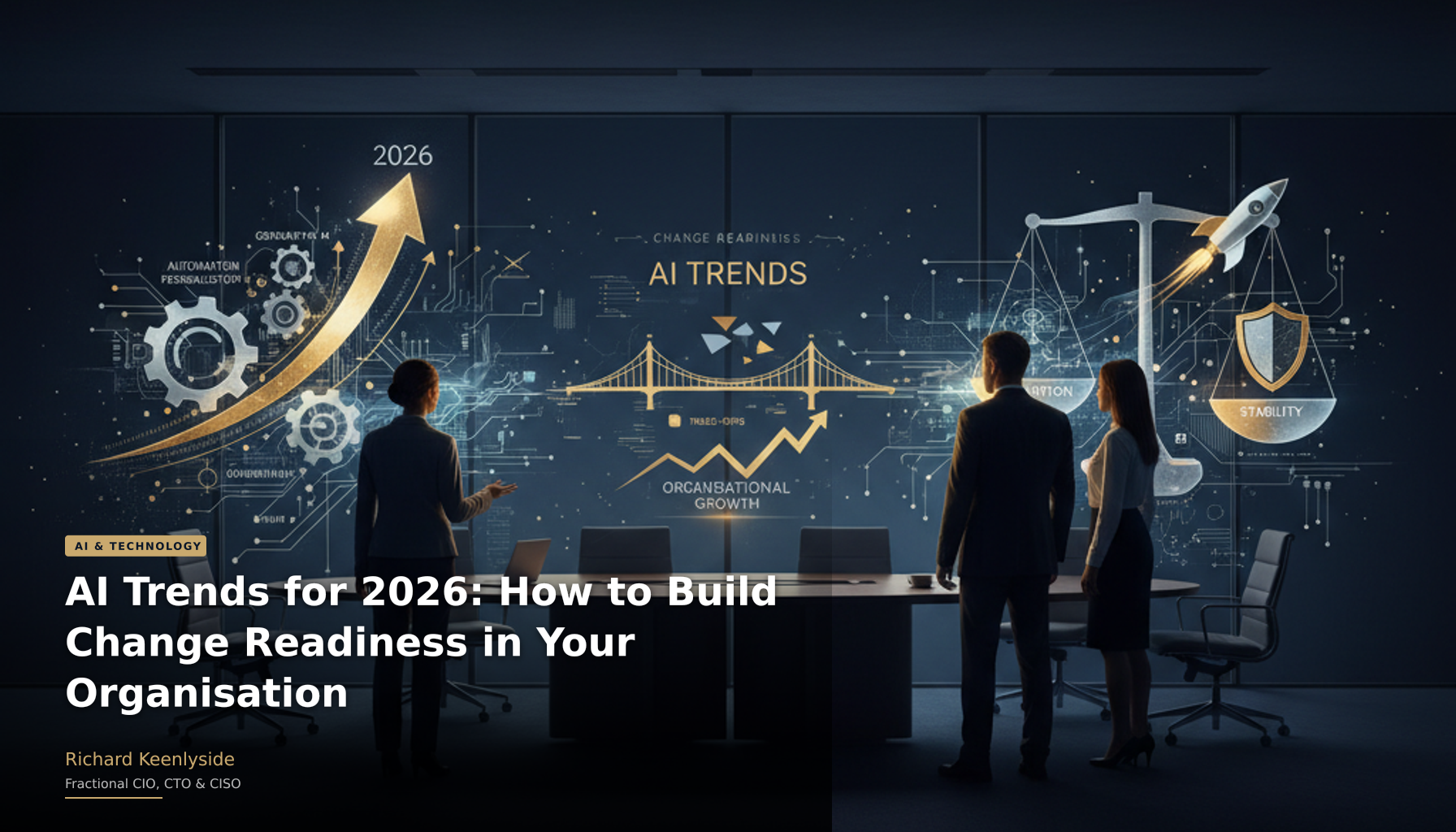
Why Building AI Change Readiness Matters
Organisations investing in AI technology without deliberate change readiness face considerable risks. The landscape of AI in 2026 is complex, integrating advances like generative AI, embedded automation, and ethical governance requirements. Without a structured readiness approach, businesses end up with disjointed implementation, unclear ROI, and possible workforce disruption.
Change readiness is critical for boards, C-suite executives, and transformation leaders who must make strategic decisions balancing technology benefits against impacts on people and operations. Failing to manage this transition systematically damages competitive advantage and may erode stakeholder trust, particularly when legal or ethical considerations come into play.
AI Trends for 2026: Building Change Readiness and Balancing Trade-Offs
Organisations must focus on practical steps aligned to the key AI trends shaping 2026 to build effective readiness. These include:
- Generative AI Integration - As generative AI matures, readiness means adapting business processes and upskilling teams to harness creative AI applications effectively, while implementing robust validation to counter hallucination risks.
- Explainable AI and Ethics - Building trust requires clear governance and transparency around AI decisions. Change readiness involves embedding explainability frameworks and ethical compliance into AI deployment strategies.
- Hybrid Human-AI Workflows - Rather than full automation, the trend is collaboration between AI and human experts. Readiness includes redesigning roles and decision workflows to leverage AI augmentation, ensuring acceptance and productivity gains.
- Data Strategy Evolution - AI effectiveness depends on quality data foundations. Organisations must improve data governance, lineage, and quality controls as integral to readiness, balancing investment in data platforms against time-to-value demands.
- AI Ops and Continuous Monitoring - Operationalising AI requires ongoing model monitoring, bias detection, and security controls. Readiness needs to incorporate new roles and tooling focused on AI lifecycle management to maintain trustworthy outcomes.
These trends demonstrate that readiness is multifaceted, requiring strategic governance, technological adaptation, and cultural transformation. Balancing trade-offs between speed, cost, compliance, and workforce impact is where many struggle.
Driving Successful AI Change Readiness: A Real-World Perspective
From my work advising PE-backed businesses and multinational enterprises, I see a common pattern: organisations accelerate AI pilots without embedding change readiness upfront, leading to stalled scaling and frustration. For example, one client rushed generative AI deployment in customer service but neglected to prepare agents with clear guidelines or feedback loops, resulting in inconsistent service quality and employee pushback.
By contrast, a more successful client took a phased readiness approach. They mapped the human-AI workflow carefully, invested in training with practical scenarios, established an AI ethics council, and deployed continuous monitoring dashboards for model performance. This balanced approach allowed them to scale confidently whilst managing trade-offs such as cost versus accuracy and automation versus human oversight.
These cases highlight that change readiness is not a one-time project but an ongoing capability development. It is essential to invest in leadership alignment, clear communication, and structured governance alongside technology adoption.
Common Mistakes to Avoid When Building AI Change Readiness
- Starting AI initiatives without defined readiness objectives aligned to business goals
- Ignoring the cultural and people impact of AI change, leading to resistance and disengagement
- Neglecting ethical and compliance frameworks, risking reputational damage and legal exposure
- Underestimating the complexity of data governance required for trustworthy AI
- Rushing to automate without designing hybrid human-AI workflows that maintain quality and control
- Failing to implement continuous AI lifecycle monitoring and model governance post-deployment
Frequently Asked Questions
What is meant by change readiness in the context of AI?
Change readiness refers to an organisation’s preparedness to successfully adopt and integrate AI technologies. This includes aligning people, processes, governance, and technology to manage the transition smoothly and sustain value over time.
How do organisations balance speed of AI adoption with ethical considerations?
Balancing speed and ethics requires upfront governance frameworks, clear policies, and explainability mechanisms embedded in AI design. Prioritising pilot phases and phased rollouts helps manage risks without delaying innovation unnecessarily.
What role does data strategy play in AI change readiness?
Data strategy is foundational for AI success, ensuring access to high-quality, governed data sets. Organisations must balance investments in data infrastructure with delivering timely AI value, making iterative improvements part of readiness planning.
In summary, AI trends for 2026 demand more than just technology deployment. Building change readiness while balancing trade-offs is a strategic imperative to avoid common pitfalls and drive scalable outcomes. I advocate for a holistic approach combining governance, workforce enablement, and operational discipline to ensure AI initiatives deliver lasting advantage.
How Richard Can Help
Make AI Work for Your Business
Most organisations are asking the same question: how do we capture real value from AI without the risk and noise? I help leadership teams develop practical AI strategies grounded in business outcomes, not vendor hype. If your board is ready to move from experimentation to execution, I would welcome a conversation about what is genuinely possible for your organisation.